Shedding the Mask Is Not Enough
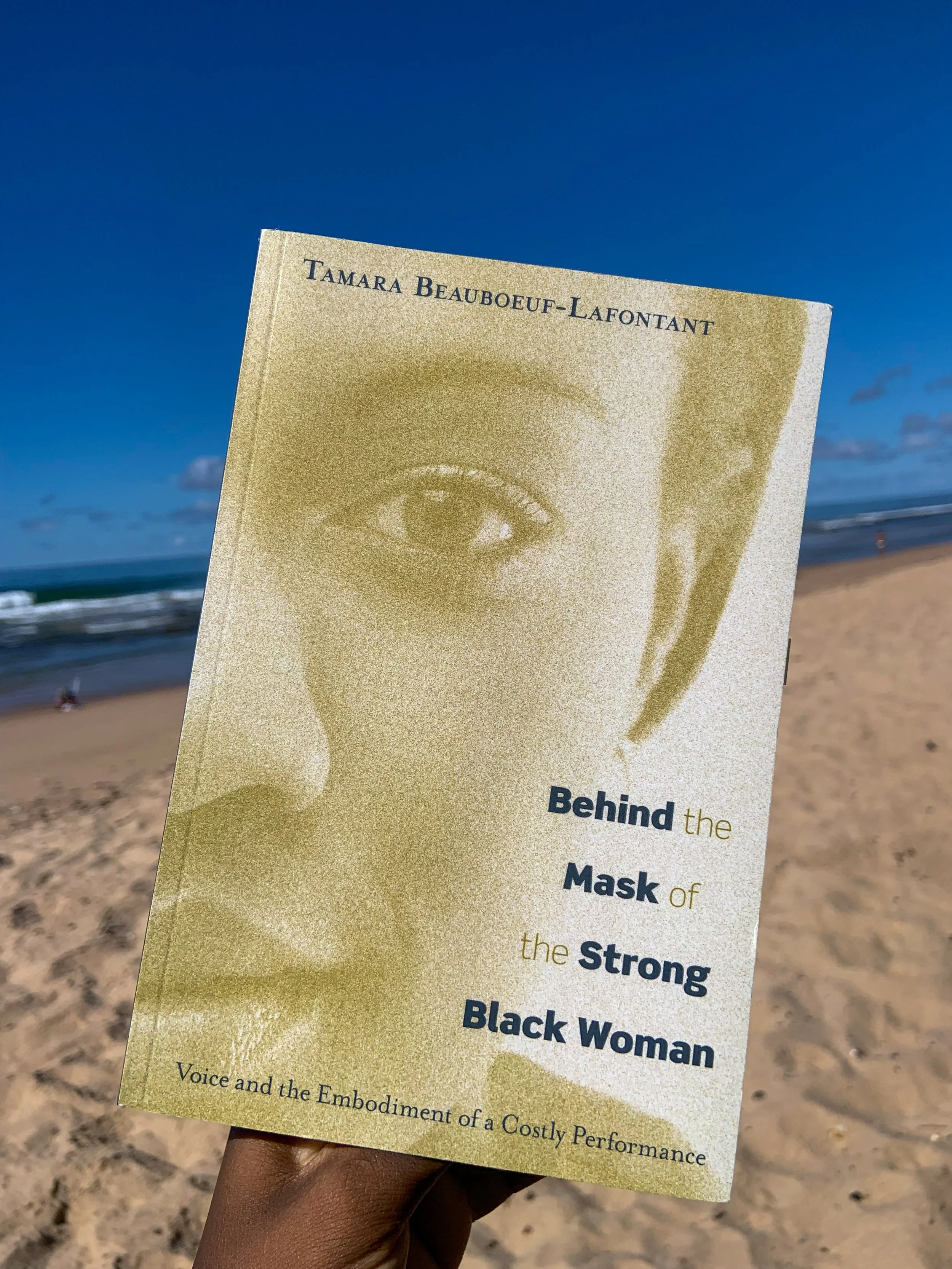
A Reflection on Behind the Mask of the Strong Black Woman
Before picking up this book, I’d recommend bell hooks’ Ain’t I a Woman, particularly her analysis of how colonization shaped the specific social relations between Black women and the rest of society — namely white men, white women, and Black men respectively, and how each of those relationships, for different reasons, came to demand the same thing from Black women: endurance, self-erasure, and “strength.” Understanding that construction gives essential context for the mask this book interrogates.
As a strong believer in individual stories as archives of knowledge, I particularly appreciated the author’s voice-centered approach. Individual stories matter precisely because they get erased in collective spaces — we often see public commitment to liberation while mistreatment is tolerated inside homes. Our collective discourse around liberation has remained abstract, asking individuals — who make up the collective — to self-erase and self-sacrifice in the name of a community that fails to account for their specific realities. While it loudly preaches liberatory values and principles, it fails to make them actionable in the context of interpersonal dynamics and smaller social units.
What makes us think we will liberate the world if we refuse to show up for the people who live in our backyard?
The author does not ignore the structures that we need to address if we want to move toward liberation. Oppression, racism, patriarchy are named. But there is a gap between naming the harm and the solutions offered, which remain largely individual: shed the mask, practice self-care, tell your story. Naming is not enough if the response still falls on the person carrying the weight.
Self-care and wellness are often mentioned in the book as essential parts of the process of taking off the mask of the Strong Black Woman. And although these things are important, thinking that changes in Black women’s and their community’s mindset will be enough to shift structural impositions can be dangerous.
The author also cites Layla Phillips, who argues: “While institutions can be problematic, what is more problematic are the thought processes, emotional structures, attitudes, and social practices that make such institutions, and indeed the relations of oppression and domination wherever they manifest, possible in the first place…. [I]n the absence of changed minds and changed practices, dismantled social institutions will only reform in newly oppressive ways.”
Although I partially agree with this, the interpersonal practices of oppressed groups are not the core of the problem. Oppressed people did not create those institutions. They were built by others whose impact persists now, and we do not have the political and economic power to dismantle them alone. Social institutions also impact social practices — they feed into each other and do not change separately. Black women’s material conditions need to change within sociopolitical structures so they can actually exist as full human beings who get to live beyond mere survival. In that sense, oppressors' social practices and “mindsets” are the ones that would require change first so they can address their privileges and the violent structures they have built. The responsibility needs to shift from the individual forced to carry the burden to the groups who created the system.
In my view, what storytelling can do is create discomfort by exposing unjust realities — make people sit with what they benefit from and what they refuse to confront, in private spaces and public ones. Getting our stories out is also good for our bodies — we know that what we do not say inevitably comes out in the form of illness. So, storytelling has real individual and collective value. But we should be careful not to ask people to expose themselves, to be vulnerable, as if their story alone is what will change the system. We cannot meditate and breathe our way out of oppression, and we should not be made to believe that telling our stories will dismantle structures whose dismantling is also needed to create safe spaces where those stories can be told.
As a Black woman living at the intersection of several other identities who has been in her own process of shedding the mask for years, I can attest that it does not magically change your material and social conditions. It often continues to be a lose-lose game — you just deal with different losses. Tell your stories anyway, in the ways and spaces that make sense for you. Make people tired of hearing them. Keep them up at night the way they keep you up. I know, realistically, it will not change the structure. But there is no reason to let them live comfortably while we do not.
One of the author’s interviewees said, “(...) if I die tomorrow, nobody’s going to put themselves in the grave with me. I’m going alone. That means everyone has a way of surviving without me. So, don’t hold on to me like if I was your very lifeline.” I’d rephrase and say: Do not allow anybody — especially men and family — to hold on to you like you are their lifeline. You cannot afford to be.
